

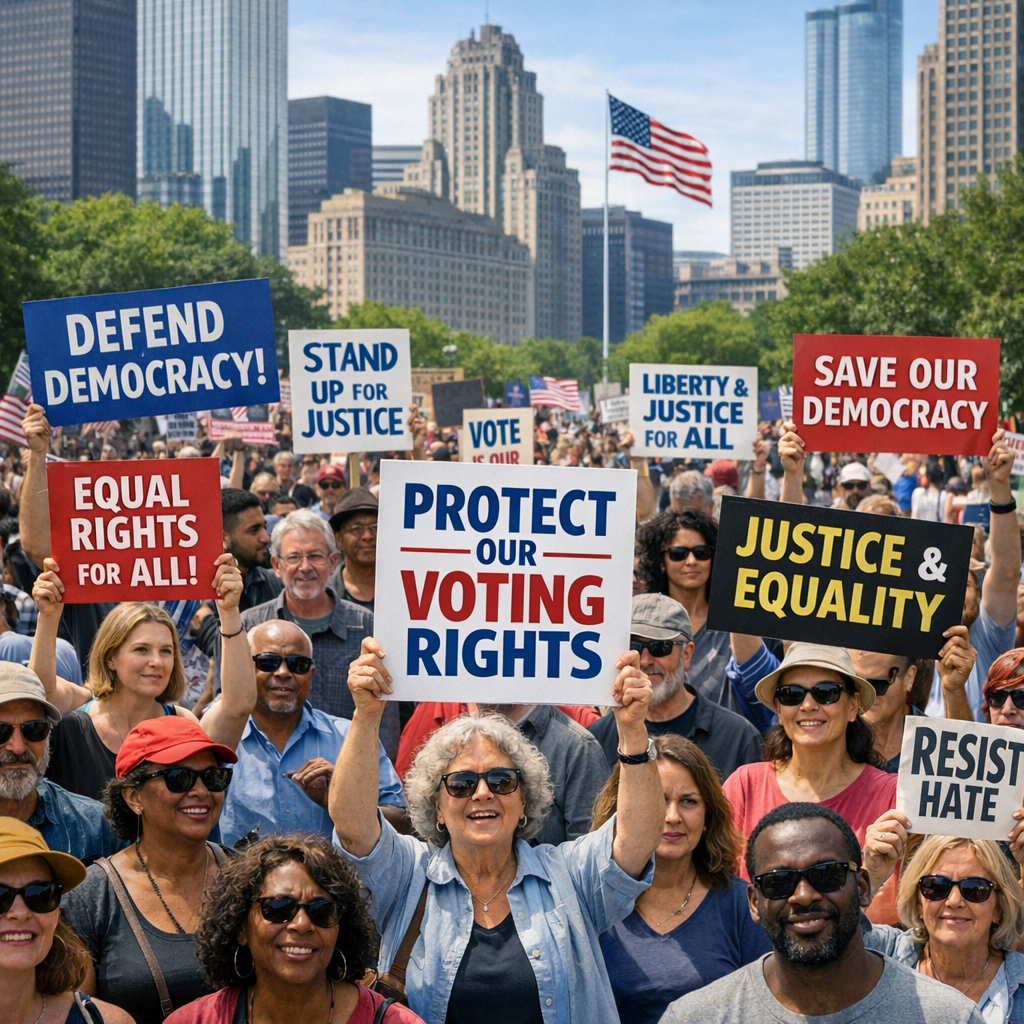
In recent times, the ‘No Kings’ movement has gained momentum across the United States, with citizens from diverse backgrounds uniting to voice their concerns over current governmental actions and policies. These rallies, characterized by their peaceful demonstrations and widespread participation, underscore a collective desire for transparency, accountability, and adherence to democratic principles.
Origins and Objectives
The ‘No Kings’ movement began as a grassroots initiative, aiming to address perceived overreach and advocate for the preservation of democratic norms. Participants emphasize the importance of checks and balances within the government and express concerns over policies they believe undermine civil liberties and democratic institutions.
Nationwide Participation
From bustling metropolises to small towns, the movement has seen participation from a broad spectrum of society. Notably, events have been organized in all 50 states, reflecting a widespread resonance with the movement’s message. In major cities, tens of thousands have gathered, while smaller communities have also shown significant support, indicating the movement’s extensive reach.
Key Events and Figures
Prominent figures from various sectors have lent their voices to the cause. For instance, renowned musician Bruce Springsteen headlined a major rally in St. Paul, Minnesota, performing songs that resonate with themes of justice and freedom. Such involvement has amplified the movement’s visibility and underscored its cultural significance.
Implications and Future Outlook
The ‘No Kings’ movement represents a pivotal moment in contemporary American discourse, highlighting the populace’s engagement with national issues. As the movement continues to evolve, it prompts important conversations about governance, civil rights, and the role of citizen activism in shaping policy. Observers note that its sustained momentum could influence future legislative agendas and electoral outcomes.
In conclusion, the ‘No Kings’ rallies exemplify the enduring spirit of democratic engagement in the United States. They serve as a reminder of the power of collective action and the ongoing dialogue between the government and its citizens.